[elementor-template id="3815"]

UXtraordinary pets
and their UX power

Ultra Jack 

Super power: Empathy

Ultra Jack can’t read mind, no!

He is just terribly Empathic. Empathy is the ability to understand and share the feelings of another person. It involves putting yourself in someone else’s shoes, imagining their perspective, and feeling what they might be feeling. Empathy is a crucial skill for building strong relationships and understanding others. It can also motivate us to help others and make a positive impact on the world.

Vegetables can’t read mind, neither!

With his UX power Ultra Jack is dedicated to save humanity. He could share with us the needs, the fears and the motivations of all natural beings. Yeah, yeah, like plants, ants and mans. They all shares feelings and emotions, you know – says UJ. (n.b. : I am not saying that i personnaly do believe that your mint in your mojito is crying when you smash it but Ultra Jack can tell).

Combining empathy with the other UXtraordinary pets would reduce harm, increase well-being, advance knowledge, promote equality, address injustice, and build supportive, compassionate relationships and communities like Don Norman profess in his last book “Design for a better world”.

Empathic Ultra Jack
 

Empathy & UX – a love story

Empathy and UX (User Experience) are like two peas in a pod, often found together in the realm of design and technology. They share a deep connection, forming a powerful bond that drives exceptional user experiences.

Understanding the Connection

  • Empathy as the Foundation: Empathy is the cornerstone of UX design. It’s the ability to understand and share the feelings of another person. In the context of UX, it means stepping into the shoes of the user and experiencing their journey from their perspective.
  • UX as the Expression: UX design is the tangible manifestation of empathy. It’s about creating products and services that not only meet user needs but also resonate with their emotions and experiences. By understanding users’ pain points, frustrations, and desires, designers can craft solutions that are not just functional but also meaningful.

Why Empathy Matters in UX

  • User-Centered Design: Empathy ensures that design decisions are rooted in user needs and preferences, rather than being driven by personal biases or assumptions.
  • Improved User Satisfaction: When designers understand users’ emotions and motivations, they can create products that delight and satisfy.
  • Enhanced User Engagement: Products that resonate with users on an emotional level are more likely to foster loyalty and engagement.
  • Reduced Frustration: By anticipating user needs and pain points, designers can minimize frustration and improve the overall user experience.
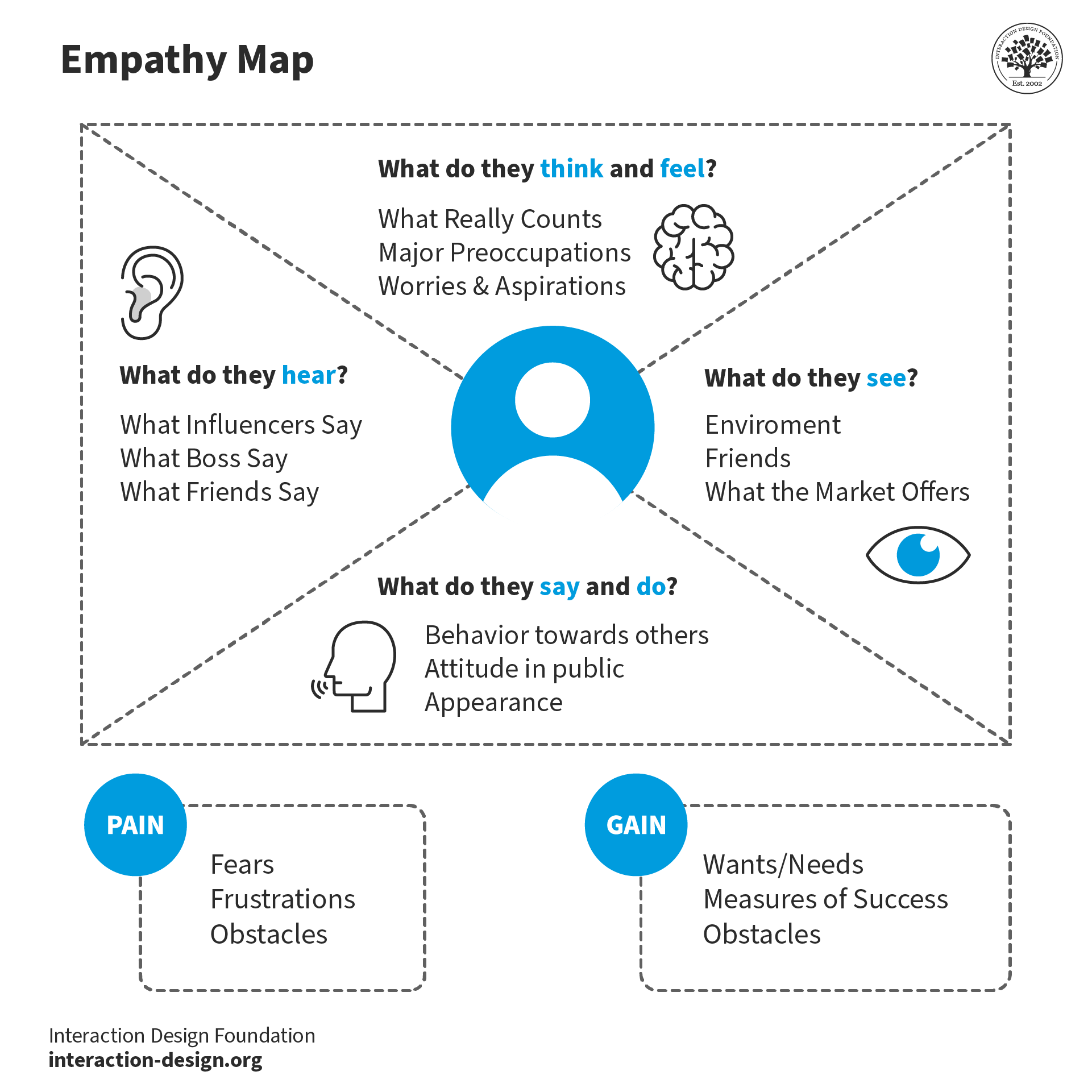
© Interaction Design Foundation, CC BY-SA 4.0

How to Cultivate Empathy in UX Design

  • User Research: Conduct in-depth interviews, surveys, and usability testing to gather insights into users’ thoughts, feelings, and behaviors.
  • Personas: Create detailed personas that represent different user segments, helping designers empathize with their unique needs and perspectives.
    → Check this template to build your UX persona’s
  • Empathy Mapping: Use empathy maps to visualize users’ thoughts, feelings, actions, and pain points.
    → Check this template to build your Empathy Map
  • Observation: Observe users in their natural environments to gain a deeper understanding of their behaviors and habits.

In essence, empathy and UX are inseparable partners.

Empathy provides the foundation for understanding users, while UX design offers the means to create meaningful and satisfying experiences. By nurturing this connection, designers can create products that truly resonate with users and make a positive impact on their lives.

How about a coffee with Ultra Jack?

[elementor-template id="3824"]