
For 2 years, I help Directorate General for Digital to create the budgeting tool for the entire commission. This involves hundreds of people from DIGIT but also stakeholders who mainly comes from DG International Partnership.
This tool will manage Programming and Planning of budget but also connect with contracts of goods and resources like external labor (so I build the system that pays me 😉 ).
I have already worked 3 years for DIGIT in the past but on the public website for Grants & Tenders. The today mission is behind the curtain. I discover the process that triggers all the mechanisms of giving funds to organisation all over the world.
I work inside a UX Team of 10 senior profile. After 2 years in the eProcurement department, I’ve consolidated a helicopter view by putting the pieces of this huge jigsaw together. Given that the IT architecture is modular, that it is governed by a design system and that there are many business stakeholders, I have to interact with several teams with different agendas and objectives.
Over time, I have gained the trust of European civil servants. Today I take on the role of product designer – linking IT jargon and user-centred UX thinking to business objectives.
In April 2024, we organized a design sprint to tackle the user journey of contracts management inside the European Commission.
(Here’s a summary of one of the many different tasks I’ve carried out this year. For another type of tasks, I invite you to see my UX missions for Capgemini)
Context description
- The IT system incorporate different modules that interact with each other
- The data are mainly in the shape of data-table like a typical excel sheet
- Another big part of content lies in the shape of form field
- As you can imagine, all this has to do with complex business processes.
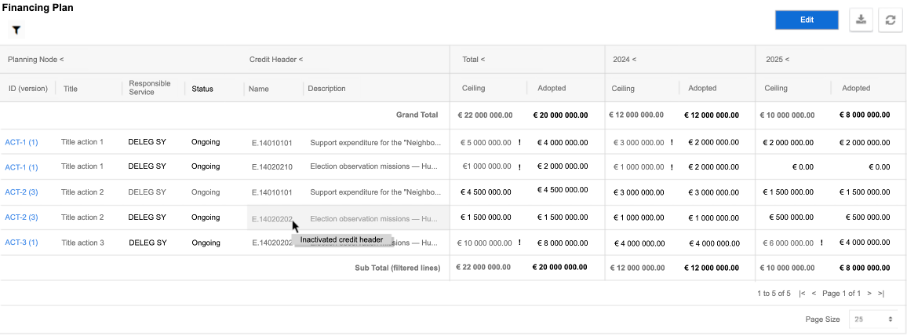

My job is to make these understandable and accessible to a public who often change jobs or departments – our research has shown that some people come and go every 6 to 12 months. These systems require several weeks of training. So, users would need clear guidance and fast training to be up and running before jumping to other function.
Design Sprint
5 days to solve problem and come with new ideas
I proposed and led the organisation of a design sprint in spring 2024. This method – which is very American – means that user data collection can be shortened enormously, new concepts can be tested and validated – or not – at the end of the week. (For more information about this UX method, I refer you to Jake Knapp’s website and his sprint book).
During this design sprint, one phrase came up a lot during the workshops with the users: ‘One has to remember the procedure’. Why does this little phrase have such great repercussions in this context? Because the system is not designed to guide people in what they should do. And as each person is responsible for a small part of the procedure, when one link is missing, the whole chain is stopped for weeks.
So this is the 1st benefit of our research: establishing the constraints and difficulties encountered by real users who have to use a system that is not very user-friendly.
A 2nd benefit: establishing the work organisation of business processes. We found that the roles assigned by the system do not always correspond to the actual use of the user’s tasks. This has the effect of overwhelming the user with notifications and unsolicited tasks to which they don’t know how to respond.
Design decision after those 5 days of sprint
A great deal of other data was gathered during these meetings, condensed into just 5 days. It enabled us to fill in the gaps in our user journey mapping and to compare the needs of end users with their business objectives and IT implementation.
After the analysis, we collected all the feedback into 7 topics. These were prioritised by the business. So we’ve got a busy schedule for the rest of next year, trying to find solutions to the problems faced by financiers who need to get their budgets in on time (otherwise, I wouldn’t get paid :-p ).
UX Recommandations
Here are our recommendations in a nutshell:
- Trying to fit to the user the present tasks: not the one from the past, not the one for the future. (those will still be available but not emphasize)
- Trying to fit to the user the right tasks: not the one from other unit/DG/etc… IT system should automatically directed the user to the unit he is attached (the other unit will still be available but not emphasize)
- Think of a general navigation. For the moment, these different modules are not structured together. They are sorely lacking in a coherent and clear Information architecture corresponding to people’s business flow.
Julianne, a crab fisher in Madagascar
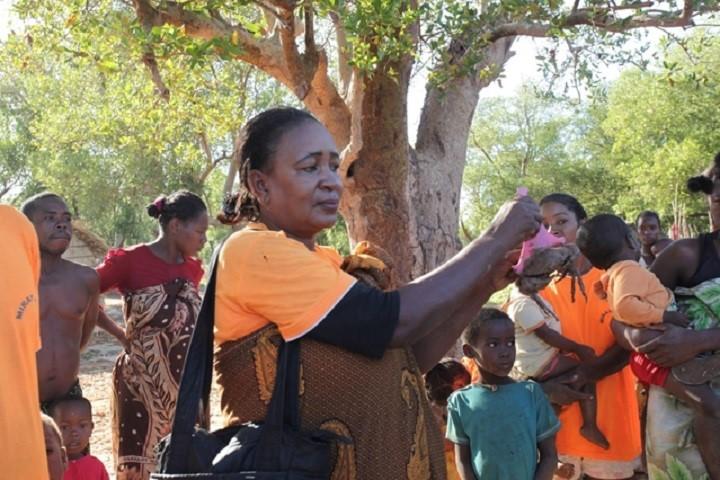
To find out more about how the European Union is helping you and me through this budget tool, here’s a short story:
©European Union
After a political crisis of more than 5 years (2009-2014), Madagascar is now in a process of political normalisation. Development challenges are huge as the social, economic and environmental situation remains worrisome. About 90% of the Malagasy population lives on less than US $2 per day.
Agriculture, including fishing and forestry, is the mainstay of the economy, accounting for more than one-fourth of GDP and employing roughly 80% of the population.
Julianne is a crab fisher in Madagascar. She lives with her mother, her husband and their 4 children. They face environmental degradation coming from plastics and oil. The crab are smaller than in past and don’t taste what they used to be.
The European Commission allow money for a ‘Green Deal’: combats environmental degradation, conserves biodiversity and at the same time, it increases agricultural production in quantity, value, and quality, according to sustainable practices.